

The uncomfortable truth many women aren’t told
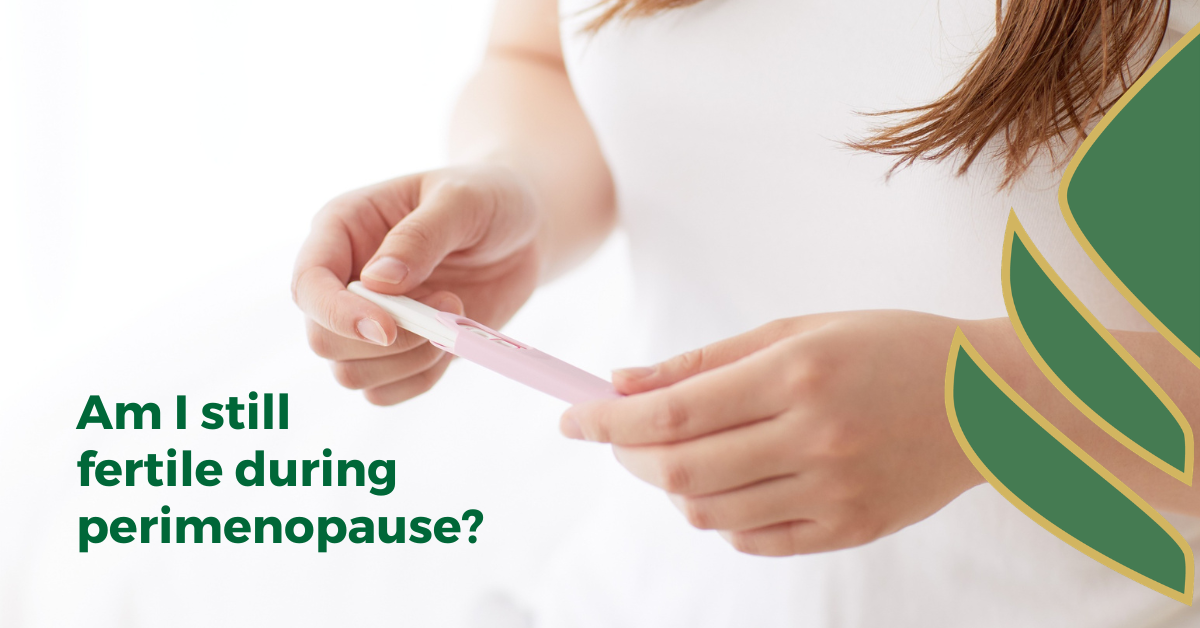
You’ve probably heard you’re “too young for menopause” - yet your periods are changing, your sleep is disrupted, and your mood feels unpredictable. Beneath it all sits a quiet but important question: can I still get pregnant during perimenopause?
For many women in their 40s, this uncertainty becomes a constant background worry. Fear of an unplanned pregnancy. Confusion around contraception. Frustration at not understanding what their body is actually doing.
Let’s clear that confusion.
What perimenopause really means for fertility
Perimenopause is the hormonal transition phase leading up to menopause. It can begin 8-10 years before your final period, often starting in your late 30s or early 40s.
During this stage, your ovaries don’t stop working - they work inconsistently.
Ovulation may still occur, but not every cycle. Some cycles release an egg; others don’t. This unpredictability is what creates so much confusion around fertility and contraception.
Can you get pregnant in perimenopause?
Yes - pregnancy is still possible during perimenopause.
While fertility naturally declines with age, ovulation can still occur even when periods are irregular or lighter. This means pregnancy can happen when it’s least expected, particularly if contraception has been stopped too early.
Why your periods are longer, shorter, heavier, or irregular
Hormonal fluctuation is the hallmark of perimenopause.
Oestrogen may spike high one month and crash the next. Progesterone - produced after ovulation - often declines earlier and more consistently.
When progesterone is low or absent:
- Periods may come closer together
- Bleeding can become heavier or prolonged
- Cycles may be skipped entirely
Shorter cycles often reflect frequent oestrogen surges. Longer cycles usually signal missed ovulation.
Your body isn’t broken. It’s responding to shifting hormonal signals.
Should I continue contraception during perimenopause?
This is one of the most commonly asked questions - and for good reason.
If you are still menstruating, contraception is still recommended, unless pregnancy would be welcome.
Many women stop contraception too early, assuming irregular periods mean infertility. Unfortunately, this assumption is one of the most common reasons for surprise pregnancies in the mid-to-late 40s.
Medical guidelines generally advise:
- Contraception until 12 months without a period after age 50
- Or 24 months without a period if under 50
If you’re unsure, this is a conversation worth having with your GP or practitioner.
What most women actually want during this phase
Very few women in perimenopause are focused on fertility alone.
What they really want is:
- Predictability instead of hormonal chaos
- Emotional steadiness
- Clear thinking and sustained energy
- Restful, reliable sleep
- Confidence in their body again
At this stage, supporting the nervous system, brain, and hormonal communication becomes just as important as reproductive health itself.
Supporting hormone balance without forcing the body
During perimenopause, the goal is not to “push” hormones back to where they were at 30.
The goal is supporting regulation during a new phase.
Botanicals such as Vitex have a long history of use in supporting the hypothalamic-pituitary-ovarian axis, particularly when cycles are erratic. Nutrients like zinc play an important role in hormone signalling and stress response.
Thoughtfully formulated blends that include herbs for emotional wellbeing, alongside key nutritional cofactors, can help women feel more even as hormones fluctuate.
This is where Female Balance fits naturally into a perimenopause support strategy, helping address both cycle irregularity and mood changes.
Brain fog, fatigue, and “not feeling like yourself”
Fertility changes don’t occur in isolation.
Hormonal shifts affect neurotransmitters, stress hormones, and cerebral blood flow - which is why so many women experience:
- Brain fog
- Reduced focus
- Mental fatigue
- Word-finding difficulties
This often creates a deeper fear: losing clarity, competence, and confidence.
Targeted herbal support - such as rhodiola, bacopa, ginkgo, and Siberian ginseng - has traditionally been used to support mental stamina and cognitive performance during times of stress and transition.
Memory & Energy Support addresses this often-overlooked layer of perimenopause.
Sleep, stress, and fertility signals
Sleep disruption is not just “another symptom”.
Poor sleep amplifies cortisol output, disrupts glucose regulation, and further interferes with hormonal signalling - including ovulation cues.
Many women notice:
- Waking between 2-4 am
- Racing thoughts
- Feeling tired but wired
This keeps the nervous system stuck in high alert.
Gentle nervines and adaptogenic herbs such as withania, passionflower, and chamomile have traditionally been used to support sleep quality and emotional regulation during hormonally active life stages.
Calm & Sleep Support is designed to support this restorative foundation, which underpins hormone balance as much as mood.
Bone health matters earlier than you think
Even while fertility still exists, oestrogen fluctuations begin affecting bone turnover.
Bone density loss can begin during perimenopause, not after menopause.
Calcium alone is not enough. Magnesium, vitamin D3, and vitamin K2 are essential for:
- Bone mineralisation
- Muscle relaxation
- Nervous system function
This is why proactive support such as Bone & Muscle Support becomes relevant well before menopause itself.
Knowledge is the first form of power
Perimenopause doesn’t mean fertility disappears overnight.
It means your body requires a different kind of support.
Understanding what’s happening allows you to make informed decisions about contraception, lifestyle, and targeted supplementation - without fear or guesswork.
If you’d like to explore formulations designed specifically for this stage of life, you can learn more about our perimenopause support range on our website.
Confident decisions start with understanding your body - and honouring where it is now.


