
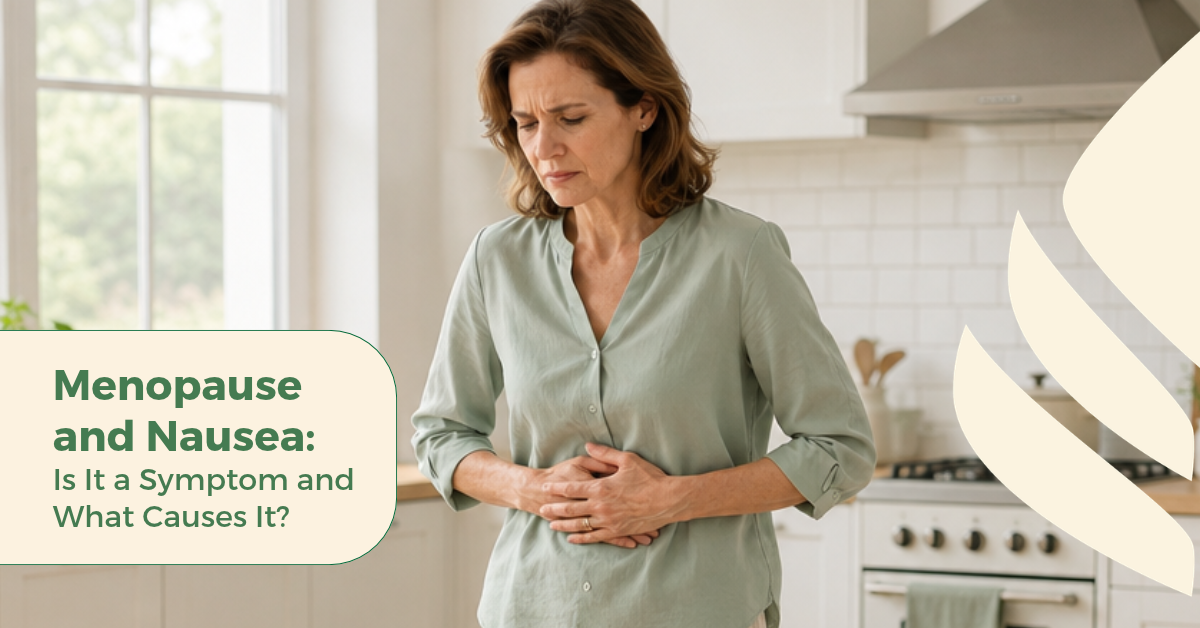
Nausea is not among the symptoms most commonly associated with menopause in public conversation, which means that many women who experience it during the transition are caught off guard. Hot flushes, sleep disruption and mood changes receive significant attention, while the digestive discomfort and queasiness that some women describe, particularly in the perimenopausal phase and in association with vasomotor events, are often dismissed or attributed to unrelated causes.
Understanding whether nausea can genuinely be part of the menopausal picture, why it occurs when it does, and what distinguishes hormonally driven digestive disruption from other causes is useful for women who have been managing this experience without a satisfying explanation.
Is Nausea a Recognised Symptom of Menopause and How Common Is It?
Nausea is a recognised, if less prominent, feature of the menopausal transition. It is reported more frequently during perimenopause than in established postmenopause, which reflects its connection to the hormonal volatility of the transition phase rather than to sustained oestrogen deficiency. Women in the early and mid-perimenopausal stages, when oestrogen fluctuates most unpredictably and vasomotor events are often at their most frequent and intense, are those most likely to report nausea as part of their symptom picture.
The experience varies considerably between individuals. Some women describe nausea that occurs predictably with or immediately following hot flushes, lasting for minutes to an hour before resolving. Others report a more generalised queasiness that is worse in the mornings, fluctuates across the menstrual cycle or is closely tied to periods of heightened anxiety or stress. Still others notice that nausea is a side effect that emerged when they began hormone replacement therapy, a pharmacological cause that is distinct from the hormonally driven nausea of the transition itself.
Because nausea is not among the symptoms most clinicians ask about in perimenopausal consultations, it is frequently underreported and under attributed. Women who do raise it often receive a workup that focuses on gastrointestinal causes, which may return normal results, without the hormonal picture being given adequate consideration. This leaves a meaningful number of women without a clear explanation for a symptom that is genuinely part of their hormonal experience.
Why Does Menopause Cause Nausea and Which Hormonal Changes Are Responsible?
Several distinct hormonal mechanisms contribute to nausea during the menopausal transition, and they often operate simultaneously, which helps explain why the experience can feel complex and unpredictable.
Oestrogen has direct effects on the gastrointestinal tract. Oestrogen receptors are present throughout the gut, and oestrogen influences gastric motility, the rate at which the stomach empties and the coordination of gut muscle contractions. The erratic fluctuations of perimenopausal oestrogen, alternating between supraphysiological spikes and sharp declines, disrupt this regulatory influence in ways that can produce digestive symptoms including nausea, bloating and altered bowel patterns.
Serotonin is centrally relevant to this picture. The majority of the body's serotonin is produced in the gut, where it plays a primary role in regulating gastrointestinal motility and coordinating the gut-brain signalling that governs digestive comfort. Oestrogen significantly influences serotonin synthesis, receptor sensitivity and reuptake across the body, including in the gut. The disruption of oestrogen's regulatory influence on the gut serotonin system during the transition is a credible mechanism for the digestive changes and nausea that many women describe, and it connects the gastrointestinal experience directly to the same hormonal shifts driving mood and vasomotor symptoms.
Fluctuating levels of follicle-stimulating hormone (FSH) and luteinising hormone (LH) are also relevant. As the ovaries become less responsive to pituitary signalling, FSH and LH rise, sometimes to significant levels. Elevated FSH has structural similarities to human chorionic gonadotropin (hCG), the hormone responsible for morning sickness in early pregnancy, which provides a biological rationale for why some perimenopausal women describe a nausea experience that has a similar quality to early pregnancy nausea.
Cortisol dysregulation, which is common in the menopausal transition due to disrupted sleep and an elevated stress response, affects gut function through the autonomic nervous system. Elevated cortisol slows gastric emptying, alters gut motility and can produce both nausea and the upper abdominal discomfort that many women describe as part of their menopausal digestive experience.
The Connection Between Hot Flushes, Anxiety and Nausea During Menopause
The relationship between vasomotor events, anxiety and nausea in menopause is not coincidental. They share physiological pathways and often occur together in a self-reinforcing pattern that is important to understand when trying to address any one of them.
A hot flush is fundamentally an autonomic nervous system event. The hypothalamus, responding to the sensitised thermoregulatory threshold that oestrogen withdrawal produces, triggers a cascade of autonomic activity: peripheral blood vessels dilate rapidly, heart rate increases, and the body initiates a sweating response in an attempt to cool itself. This sudden, significant autonomic activation, particularly the surge in sympathetic nervous system activity that accompanies it, directly stimulates the vagus nerve and activates the enteric nervous system, the gut's intrinsic nervous system. The result, for many women, is a wave of nausea that arrives with or shortly after the thermal event.
Anxiety produces the same autonomic activation through a different trigger. Elevated cortisol and a more reactive HPA axis, both features of the hormonal transition, lower the threshold for anxiety responses and keep the nervous system in a state of heightened readiness. This chronic, low-grade sympathetic activation affects gut motility and gastric tone continuously, producing a background of digestive sensitivity on which acute anxiety episodes can trigger frank nausea. For women whose perimenopausal experience includes significant anxiety, whether newly developed or worsened from a prior baseline, nausea is a frequent and often unacknowledged companion.
The gut-brain axis provides the bidirectional framework for understanding these connections. The vagus nerve carries signals in both directions between the gut and the brain, meaning that gut distress can amplify anxiety, and anxiety can worsen gut symptoms, in a loop that is difficult to interrupt at any single point. Sleep disruption from night sweats elevates cortisol, which worsens gut sensitivity and anxiety the following day, which may worsen the vasomotor threshold and produce more hot flushes, which produce more nausea, which disrupts sleep further. Addressing any part of this cycle can have disproportionate benefit across the whole.
How to Tell Whether Your Nausea Is Hormone-Related or Has a Different Cause
Because nausea is a non-specific symptom with a wide range of potential causes, some clinical thinking about pattern and context is necessary before attributing it to the hormonal transition. Several features make a hormonal contribution more probable.
Timing in relation to vasomotor events is the most specific indicator. Nausea that reliably occurs during or in the minutes following a hot flush, then resolves as the flush passes, is very likely to be mediated by the autonomic cascade of the vasomotor event itself. This pattern, when clearly present, is highly characteristic of hormonally driven nausea. Similarly, nausea that follows a pattern across the menstrual cycle, worsening in the perimenstrual window or in the luteal phase, points toward a hormonal driver.
For women in perimenopause who are still potentially ovulating, pregnancy must be excluded before nausea is attributed to the transition. This is a practical and important consideration; perimenopausal women can and do conceive, and the overlap between perimenopausal and early pregnancy symptoms is significant. A pregnancy test is a reasonable first step for any woman in this age group whose nausea is new or unexplained.
Medication review is equally important. Hormone replacement therapy is a common cause of nausea, particularly when first initiated or when doses are adjusted. Iron supplementation, certain antidepressants, and bisphosphonates used for bone health can all cause significant nausea that may be mistakenly attributed to the transition. If nausea emerged or worsened after any medication change, that relationship deserves clinical attention.
Persistent, severe or progressive nausea, nausea accompanied by vomiting that affects daily function, nausea with unintentional weight loss, or nausea associated with abdominal pain or changes in bowel habit all warrant prompt medical review rather than self-management. Gastrointestinal conditions including gastro-oesophageal reflux disease, gastroparesis, gallbladder pathology and coeliac disease can all present with nausea and may be coincident with the menopausal transition rather than caused by it. A clinical assessment that rules out structural and medical causes before attributing nausea to hormonal change is always appropriate.
Natural Support for Digestive Comfort and Nausea During the Menopause Transition
A layered approach that addresses the hormonal, autonomic and dietary drivers of menopausal digestive disruption is more effective than focusing on nausea as a standalone symptom. The most consistently helpful strategies work by stabilising the hormonal and nervous system environment that determines gut sensitivity rather than managing each episode in isolation.
Dietary adjustments are among the most immediately accessible interventions. Eating smaller, more frequent meals reduces the gastric load that can worsen nausea and avoids the blood glucose fluctuations that amplify autonomic reactivity. Cool or room-temperature foods tend to be better tolerated than hot meals during periods of vasomotor sensitivity, as thermal input from food can lower the threshold for hot flush and associated nausea episodes. Avoiding strong food aromas, fatty or spicy meals and alcohol in the hours before typical vasomotor events provides a practical buffer against digestive disturbance.
Ginger has centuries of use as a traditional support for digestive comfort and has been studied in a range of contexts involving nausea. Whether taken as fresh ginger in warm water, ginger tea or a standardised supplement, it remains one of the most evidence-informed dietary approaches for situational digestive discomfort. Adequate hydration, particularly following night sweats, is consistently overlooked as a contributor to morning nausea; beginning the day with fluid before food is a straightforward and often effective adjustment.
Addressing the autonomic and nervous system component of menopausal nausea requires genuine attention to cortisol load, sleep quality and anxiety management. Slow-paced breathwork, particularly techniques that extend the exhalation, activates the parasympathetic nervous system and can interrupt the autonomic cascade that drives hot flush-associated nausea. Consistent sleep and wake timing, cool sleeping environments and deliberate digital reduction in the evenings all reduce the cortisol elevation that amplifies gut reactivity. Physical movement that is regular but not excessively intense supports gut motility and reduces sympathetic dominance over time.
The vasomotor and hormonal dimensions of menopausal nausea are directly relevant to how NaturoElite's Menopause Day supports the overall transition. Red clover (Trifolium pratense) provides isoflavones with oestrogen receptor activity, supporting the oestrogenic signalling environment that influences serotonin pathways in the gut and the broader hormonal stability that determines vasomotor frequency. Black cohosh (Actaea racemosa) acts on serotonin and dopamine pathways directly relevant to thermoregulatory stability, which in turn affects the autonomic cascades that produce nausea in susceptible women. Affron®, a clinically studied patented saffron extract (Crocus sativus), supports mood and emotional resilience, reducing the anxiety contribution to the gut-brain cycle. Shatavari (Asparagus racemosus) as the patented SheVari4®, Rehmannia glutinosa and Hypericum perforatum (St John's Wort) contribute to broader hormonal and emotional wellbeing.
For women whose nausea is most closely tied to the anxiety-autonomic dimension of the transition, calming the nervous system directly is a complementary priority. NaturoElite's Calm & Sleep Support supports the nervous system and cortisol environment that underpins gut-brain sensitivity. Ashwagandha (Withania somnifera), clinically studied for cortisol reactivity and sleep quality, helps reduce the sustained sympathetic activation that keeps the gut in a state of heightened reactivity. Passionflower (Passiflora incarnata) and chamomile (Matricaria chamomilla) provide nervine support, calming the activated nervous system state that accompanies anxiety-related digestive disruption. Safr'Inside®, a patented saffron extract (Crocus sativus), supports mood and emotional resilience.