

Perimenopause is often where the real changes begin.
Your cycle may still be regular, but things feel different. Sleep becomes lighter, moods shift more easily, and you may notice early hot flushes, fatigue or changes in your skin and weight. This is driven by fluctuating hormones, particularly oestradiol.
This is also the stage where targeted support can be most helpful.
One of the most practical ways to understand what your body needs is through testing. A blood test for oestradiol on day 2 of your cycle can give insight into your baseline hormone levels. This helps guide whether your symptoms are linked to declining oestrogen or more fluctuating patterns, which can influence the type of support that may be most appropriate. Other hormones that may be relevant include LH, FSH, testosterone, DHEA-S and progesterone.
From there, herbal support can be tailored.
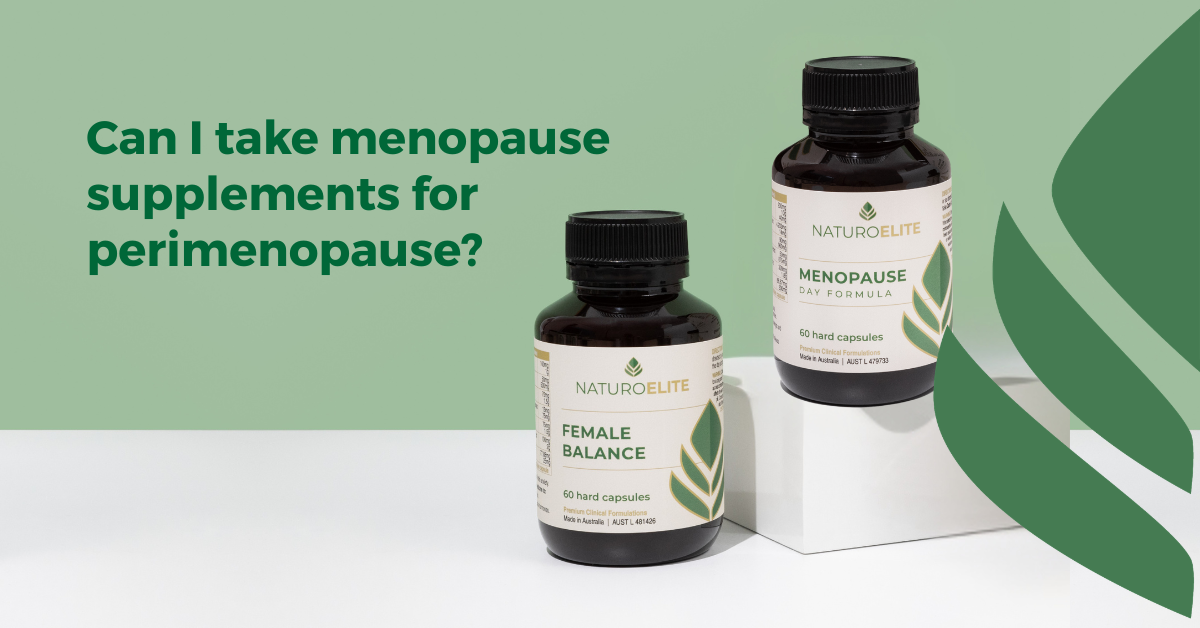
For example, formulations like NaturoElite Menopause Day Formula include herbs such as shatavari, saffron, black cohosh and red clover. These herbs have been traditionally used to support hormonal balance, mood and common menopausal symptoms such as hot flushes, vaginal dryness and low libido.
Alternatively, NaturoElite Female Balance may be more suited to earlier perimenopause, where the focus is on supporting hormonal fluctuations, mood and cycle regulation.
The key is not just taking a supplement, but choosing one that aligns with what your body is actually doing.
How long should you take menopause supplements
Perimenopause and menopause are not a short phase, so support often needs to be ongoing rather than a quick fix.
Most supplements require at least 8 to 12 weeks to assess their effects, as the body needs time to respond to both nutritional and herbal support. It’s important to give your body this window before deciding whether something is working. Some women notice early improvements at around 4-6 weeks, particularly for hot flushes and sleep.
For some women, supplements may only be needed for a few months to help stabilise symptoms. For others, ongoing support throughout perimenopause and into menopause can be beneficial, particularly as symptoms evolve over time.
It’s also important to reassess regularly. As you move through perimenopause into menopause, your needs can change, and your supplement approach should evolve with you.
What are the first signs you may benefit from support
Many women wait until symptoms feel overwhelming before seeking support, but the early signs are often more subtle.
You may notice that your sleep is not as deep or restorative, you feel more reactive to stress, or your mood fluctuates more than usual. Your cycle may shorten, lengthen or become less predictable. Energy levels can dip, and you may feel like your body is not responding the way it once did.
These early changes are often where targeted support can have the greatest impact, helping your body adapt more smoothly rather than playing catch up later.
What is the difference between perimenopause and menopause support
Understanding where you are in the transition can make a big difference to how effective your support feels.
Perimenopause is characterised by fluctuating hormones. Oestrogen can be high one cycle and low the next, which is why symptoms can feel inconsistent and unpredictable. Support during this phase often focuses on helping the body adapt to these fluctuations and supporting the nervous system.
Menopause, on the other hand, is defined by consistently lower oestrogen. At this stage, symptoms like hot flushes, night sweats, vaginal dryness and sleep disruption may become more prominent, and support is often more focused on managing these changes. Lower oestrogen can also start to impact bone health and skin health.
Choosing a formulation that aligns with your stage helps ensure you are supporting the underlying cause, not just the symptoms.
Do you need supplements if you feel fine
Not everyone in perimenopause will need supplements.
If you feel well, are sleeping well, managing stress effectively and not experiencing disruptive symptoms, focusing on nutrition, movement and lifestyle may be enough. Supplements are most valuable when there are clear signs your body needs additional support.
That said, some women choose to take a proactive approach, using targeted support early to help maintain balance as their hormones begin to shift.
Final Thought
Yes, you can take menopause supplements during perimenopause, and for many women, this is when they can be most helpful.
The most important step is understanding your body. Testing at the appropriate time, tuning into your symptoms and choosing targeted support allows you to move through this transition with more clarity and confidence.
When approached in the right way, perimenopause does not have to feel overwhelming. With the right support, it can feel far more manageable, and even empowering.


