

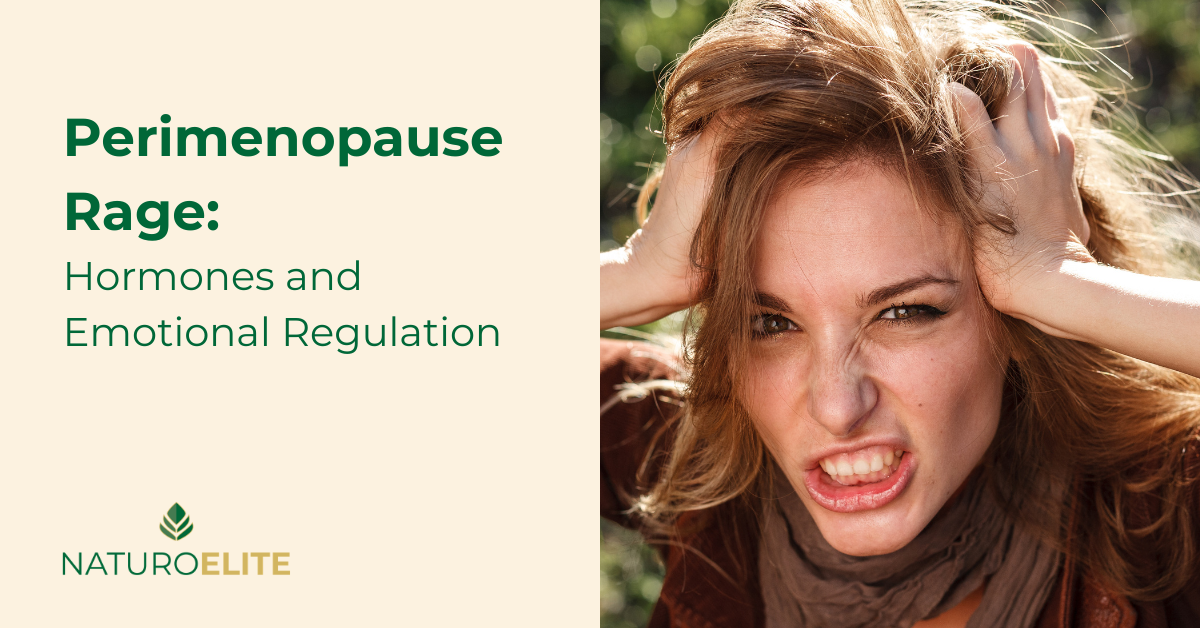
Many women entering perimenopause are shocked by how emotionally intense this stage of life can feel. One minute you may feel calm and capable, and the next you feel irritable, overwhelmed, anxious or emotionally reactive over things that previously would not have affected you as strongly.
For some women, this emotional shift can feel completely unlike themselves.
The good news is that there are real hormonal and nervous system changes occurring during perimenopause that may affect mood, stress resilience, sleep and emotional regulation. Understanding what is happening can help you support your body more effectively during this transition.
Perimenopause rage
“Perimenopause rage” is a phrase many women use to describe sudden irritability, anger, emotional outbursts or feeling constantly overwhelmed during perimenopause.
Hormone fluctuations, particularly changing levels of oestrogen and progesterone, may affect neurotransmitters involved in mood regulation, including serotonin and GABA.
At the same time, many women in their 40s are also juggling:
- Work pressures
- Teenagers or ageing parents
- Poor sleep
- Mental load and stress
- Relationship strain
- Fatigue
This combination can leave women feeling emotionally exhausted and less resilient than usual.
Many women describe:
- Feeling overstimulated easily
- Snapping at loved ones
- Increased sensitivity to stress
- Crying more easily
- Feeling emotionally “flat” or disconnected
Importantly, these experiences are common, and you are not imagining them.
How long will perimenopause last?
Perimenopause can last anywhere from a few years to over a decade, although many women experience symptoms for around 4–8 years.
The transition typically begins in the 40s, but some women notice symptoms in their late 30s.
Hormonal fluctuations are often most unpredictable during perimenopause, which is why symptoms can feel inconsistent:
- One month you feel fine
- The next month symptoms intensify
- Cycles may become shorter, longer or irregular
This unpredictability is one reason many women feel emotionally unsettled during this stage.
Perimenopause difficulty sleeping
Sleep disturbances are extremely common during perimenopause and can significantly affect emotional regulation.
Women may experience:
- Difficulty falling asleep
- Waking during the night
- Early morning waking
- Restless sleep
- Night sweats or overheating
Poor sleep affects cortisol regulation, nervous system balance and stress resilience, making emotional symptoms feel even more intense.
Supporting sleep is often one of the most important foundations for supporting mood and emotional wellbeing during perimenopause.
Our Calm & Sleep Support combines ingredients traditionally used in Western herbal medicine to support nervous system health and relieve restless sleep, alongside saffron and withania to support stress resilience and emotional wellbeing.
Perimenopause and anxiety disorder
Many women experience increased anxiety during perimenopause, even if they have never struggled with anxiety before.
Hormonal fluctuations may affect:
- Stress tolerance
- Nervous system regulation
- Sleep quality
- Mood balance
Women may notice:
- Racing thoughts
- Feeling constantly “on edge”
- Heart palpitations
- Overthinking
- Increased overwhelm
- Physical tension
Stress management, sleep support, nervous system support, nutrition, movement and may all play an important role during this stage.
Perimenopause and depression
Low mood and emotional flatness can also occur during perimenopause.
For some women, this feels like:
- Loss of motivation
- Feeling emotionally numb
- Irritability
- Hopelessness
- Increased tearfulness
- Loss of enjoyment
Hormonal changes may contribute to these emotional shifts, particularly when combined with chronic stress, poor sleep and life pressures.
Can perimenopause cause depression?
Perimenopause itself is not necessarily the sole cause of depression, but hormonal fluctuations during this stage may contribute to mood changes and increase vulnerability in some women.
If low mood is persistent, severe or affecting daily functioning, it is important to seek support from a healthcare professional.
Women do not need to simply “push through” emotional struggles during this stage of life unsupported.
Depression or menopause
Many women question whether what they are experiencing is depression, burnout, anxiety, hormonal changes, or all of the above.
The reality is that symptoms can overlap significantly.
This is why it is important to look at the whole picture, including:
- Sleep
- Stress
- Hormonal changes
- Nutrition
- Nervous system health
- Emotional wellbeing
Supporting the body holistically during perimenopause may help women feel more emotionally resilient and supported through this transition.
Our Female Balance was formulated specifically for women in perimenopause experiencing hormonal fluctuations and mood changes. It contains ingredients traditionally used in Western herbal medicine to support female hormonal balance and nervous system health, alongside saffron to support mood balance.
Female Balance is designed to support women through the emotionally unpredictable nature of perimenopause, when hormones, mood and stress tolerance can feel constantly up and down.
You can learn more about Female Balance here:
Perimenopause diet
Nutrition can also play an important role in supporting mood, energy and emotional regulation during perimenopause.
Helpful foundations may include:
- Protein with each meal
- Omega-3 rich foods
- Magnesium-rich foods
- Fibre-rich wholefoods
- Stable blood sugar support
- Limiting excess alcohol and ultra-processed foods
Magnesium is particularly important for nervous system health, muscle relaxation and stress support.
Our Bone & Muscle Support combines calcium, magnesium, vitamin K2 and vitamin D3 to support muscle function, nervous system health and overall wellbeing during midlife.
Supporting emotional wellbeing during perimenopause
Perimenopause is not just a reproductive transition, it is also a neurological and emotional transition.
Many women spend years blaming themselves for feeling more reactive, emotional or overwhelmed, without realising that fluctuating hormones, poor sleep and nervous system stress may all be contributing.
Supporting your body with sleep, nutrition, stress management and targeted nutritional and herbal support may help you feel calmer, more resilient and more like yourself again during this stage of life.


