

Perimenopause can feel confusing, unpredictable and emotionally exhausting for many women. Hormonal fluctuations during this stage may affect mood, sleep, libido, energy, cycles and overall wellbeing, leading many women to explore hormone therapy or other forms of support.
With increasing awareness around menopause, terms like HRT, hormone replacement therapy and oestrogen therapy are becoming more commonly discussed, but many women still feel unsure about what these treatments involve, who they are for, and whether they are the right choice for them.
What is HRT?
HRT stands for hormone replacement therapy.
It involves using bioidentical hormones such as oestrogen, progesterone, testosterone and DHEA to help manage symptoms associated with perimenopause and menopause.
HRT may be prescribed in different forms including:
- Tablets
- Creams
- Patches
- Gels
- Sprays
- Vaginal preparations
The goal of HRT is to help replace declining hormone levels and support symptom management during menopause transition.
Hormone replacement therapy
Hormone replacement therapy is commonly used to support symptoms such as:
- Hot flushes
- Night sweats
- Sleep disturbances
- Mood changes
- Vaginal dryness
- Joint discomfort
Some women feel significant improvement with HRT, while others may choose lifestyle, nutritional or herbal support instead, or use a combination approach alongside medical care.
Every woman’s experience of menopause is different, which is why support should be individualised.
Hormone therapy and perimenopause
Perimenopause can be particularly challenging because hormone levels fluctuate unpredictably rather than simply declining steadily.
Women may experience:
- Mood swings
- Anxiety
- Irregular cycles
- Sleep disruption
- Fatigue
- Reduced libido
- Emotional overwhelm
This unpredictability is one reason many women begin exploring hormone therapy during perimenopause, particularly when symptoms begin affecting quality of life.
However, lifestyle support, stress management, sleep support and targeted nutrition may also play an important role during this transition.
HRT for perimenopause
HRT (sometimes referred to as MHT or Menopausal Hormone Therapy) may be prescribed during perimenopause for some women experiencing moderate to severe symptoms.
Women considering HRT should discuss:
- Their symptom profile
- Personal medical history
- Family history
- Cardiovascular risk factors
- Breast cancer risk factors
- The potential benefits and risks of treatment
The decision is highly individual and should always be guided by a qualified healthcare professional.
Perimenopause estrogen replacement
Oestrogen replacement is one component of some HRT protocols.
Declining and fluctuating oestrogen levels during perimenopause may contribute to:
- Hot flushes
- Sleep disturbances
- Mood changes
- Skin changes
- Vaginal dryness
- Joint discomfort
However, hormone fluctuations during perimenopause can be complex, and symptoms are not always caused by low oestrogen alone.
Stress, sleep, nervous system health, nutrition and overall lifestyle may also significantly influence how women feel during this stage.
HRT side effects
Like all medical treatments, HRT may cause side effects for some women.
Possible side effects may include:
- Breast tenderness
- Bloating
- Nausea
- Headaches
- Mood changes
- Breakthrough bleeding
Some women tolerate HRT very well, while others may need adjustments to dosage, delivery method or treatment approach.
This is why ongoing medical supervision and regular review are important.
Does hormonal therapy cause cancer?
This is one of the most common questions women ask when considering hormone therapy.
The relationship between HRT and cancer risk is complex and depends on multiple factors including:
- The type of hormones used
- Duration of use
- Age
- Individual medical history
- Family history
- Timing of treatment
Current research suggests that risks and benefits vary significantly between individuals.
Women considering HRT should have an informed discussion with their healthcare professional to assess their personal risk profile and determine what is appropriate for them.
Supporting hormonal wellbeing naturally during perimenopause
Many women also choose to support their body naturally during perimenopause alongside medical care, or as an alternative approach.
Foundational support may include:
- Stress management
- Nervous system support
- Sleep support
- Exercise and strength training
- Protein intake
- Blood sugar balance
- Nutritional support
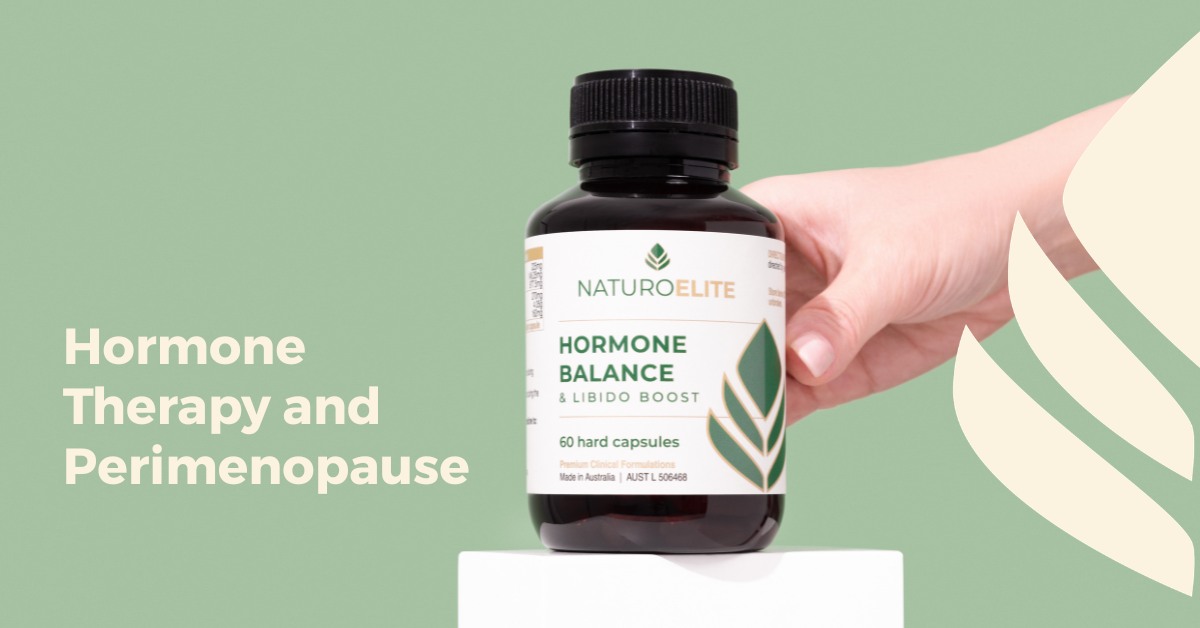
Our Hormone Balance & Libido Boost was formulated to support women experiencing hormonal changes during perimenopause and menopause, particularly when stress, mood and libido changes begin affecting overall wellbeing and confidence.
The formula is designed to support hormone balance, nervous system health and libido during this stage of life.
For women earlier in perimenopause experiencing emotional fluctuations and hormonal changes, Female Balance was formulated specifically to support female hormonal balance, stress management and nervous system health during this transition.
Navigating perimenopause your way
There is no one “right” way to navigate perimenopause.
Some women choose HRT. Others prefer herbal, nutritional and lifestyle support. Many use a combination approach alongside guidance from their healthcare practitioner.
What matters most is that women feel informed, supported and empowered to make decisions that align with their symptoms, health history and personal preferences.


